
Friend Of The Blend - Vol. 2
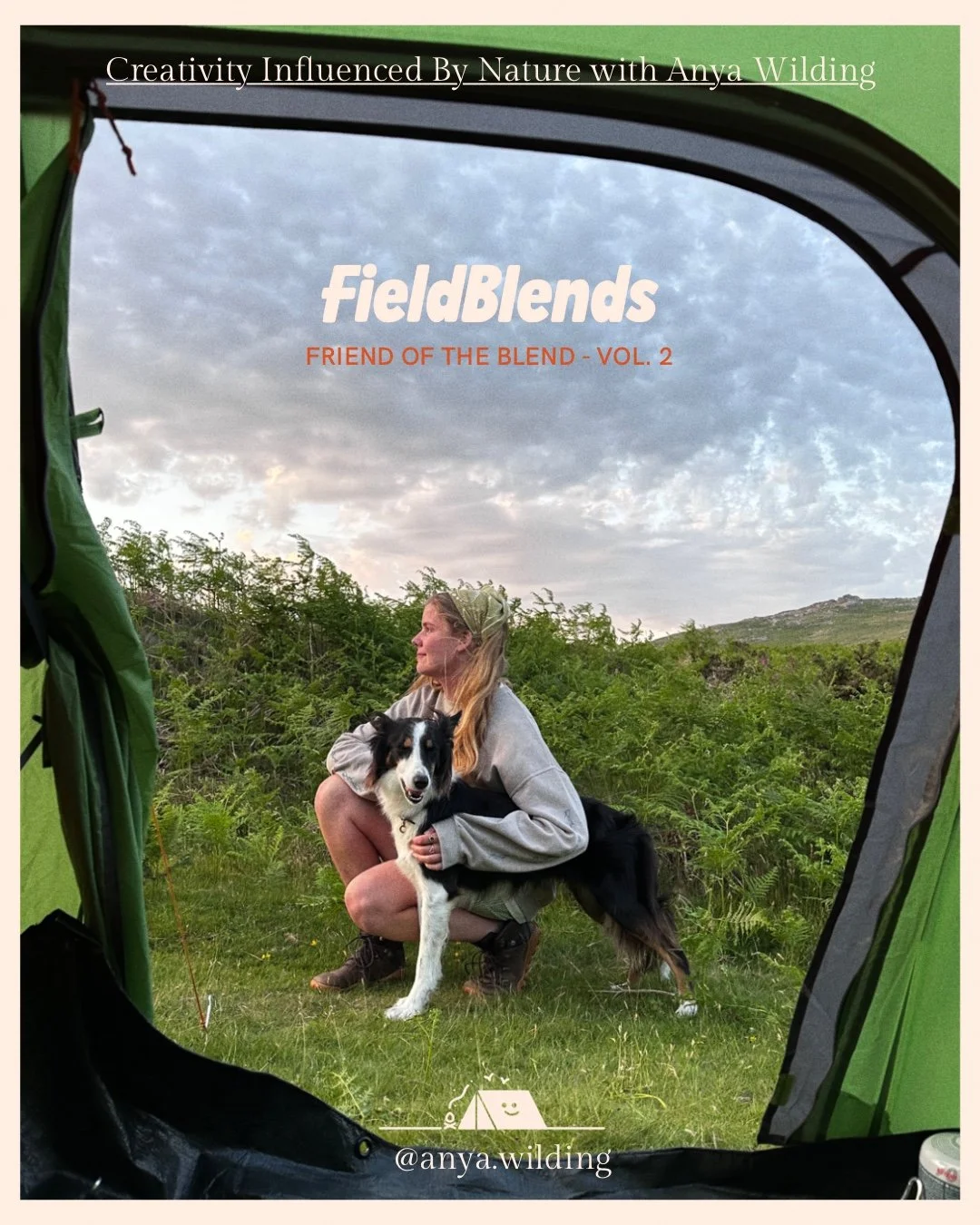
Creativity Influenced By Nature with Anya Wilding - (@anya.wilding)
“I think our general population is deeply disconnected from the natural world, we don’t know more than a handful of bird and plant species, we can’t distinguish what foragables are edible or have a basic knowledge of native wildlife and it’s a heartbreaking thing to witness.”
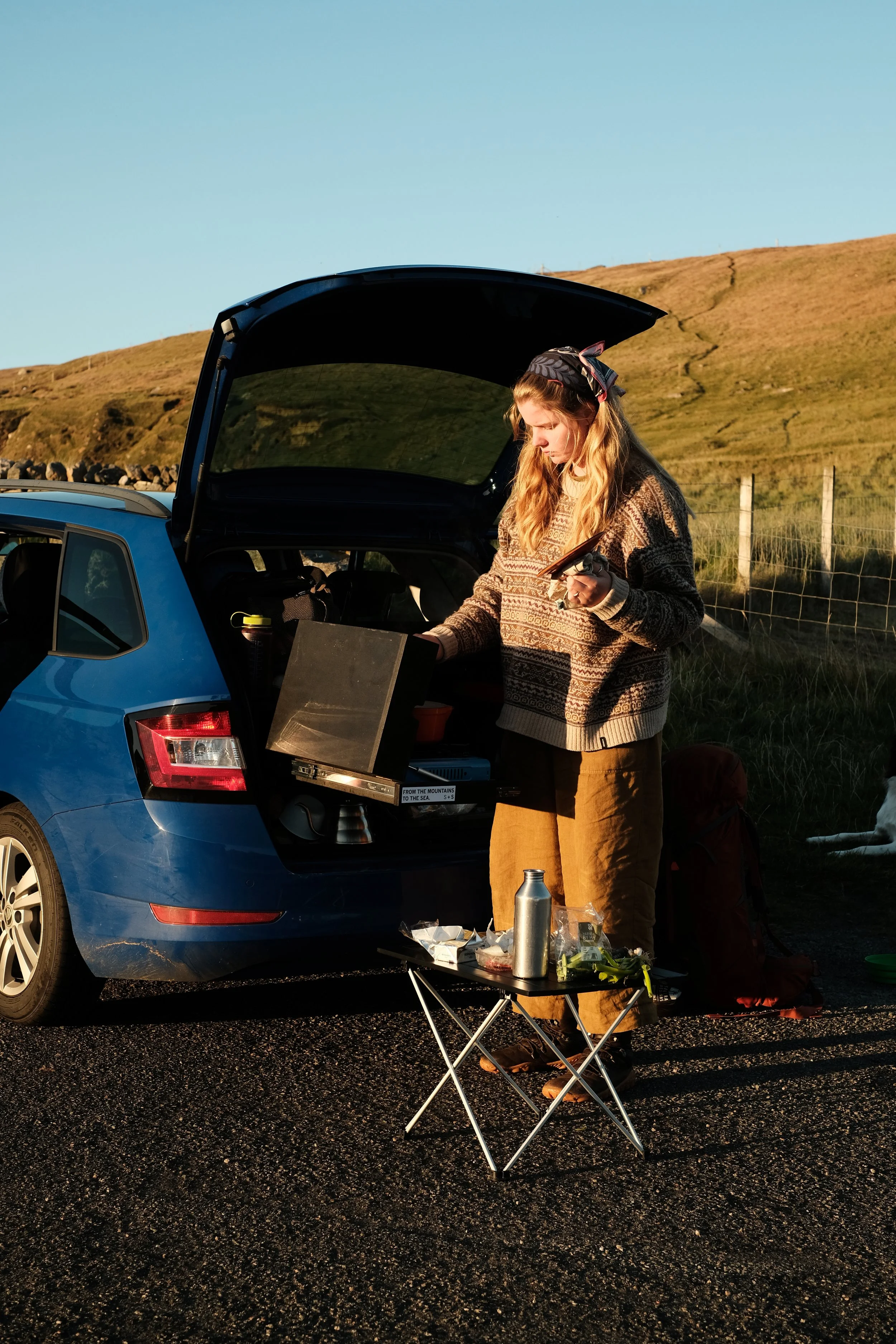
1. Let’s start with your amazingly unique home on wheels. What inspired you to live in a converted horse box, and how has that way of living shaped the way you connect with nature day-to-day? Is it always as tranquil as it may seem?
We had travelled around in a VW Caddy Maxi for a few weeks at a time- Scotland, France, Spain and lots of areas in England, I think that’s what made us realise we could potentially live in one full time. It was a combination of that and the fact we couldn’t afford to rent both a workshop and house, even if we did both work full time (which neither of us wanted to anyway). We prioritise spending a lot of time outside and living creatively which full time employment wouldn't allow.
I remember when we were renting in Truro for a year and feeling so far away from the outside, those four walls were very comfortable and without having an active dog I wasn’t spending nearly as much time in nature as I am now.
It’s certainly not always easy, windy nights mean you lose sleep, the water runs out mid shower sometimes and in the winter our solar doesn’t completely cover our power requirements. But generally it's a pretty wonderful and free way of living.
2. Your creative world seems inseparable from the outdoors. How has being immersed in nature shaped your creative journey, from photography and writing to making things by hand?
Inseparable is a great way of describing the influence of nature on my creative work. I wouldn’t be who I am or practice the way that I do without my connection to the natural world. It’s also quite an unexplainable feeling and one that has been present my entire life. I’ve always collected things, be it dead moths and butterflies, shells, rocks, feathers and other interesting things. I had a stack of books about birds growing up and our family holidays were spent almost entirely outdoors too. I am forever grateful to my parents for encouraging my brother and I to spend time outside, even if I did moan about going to the allotment regularly as a kid.
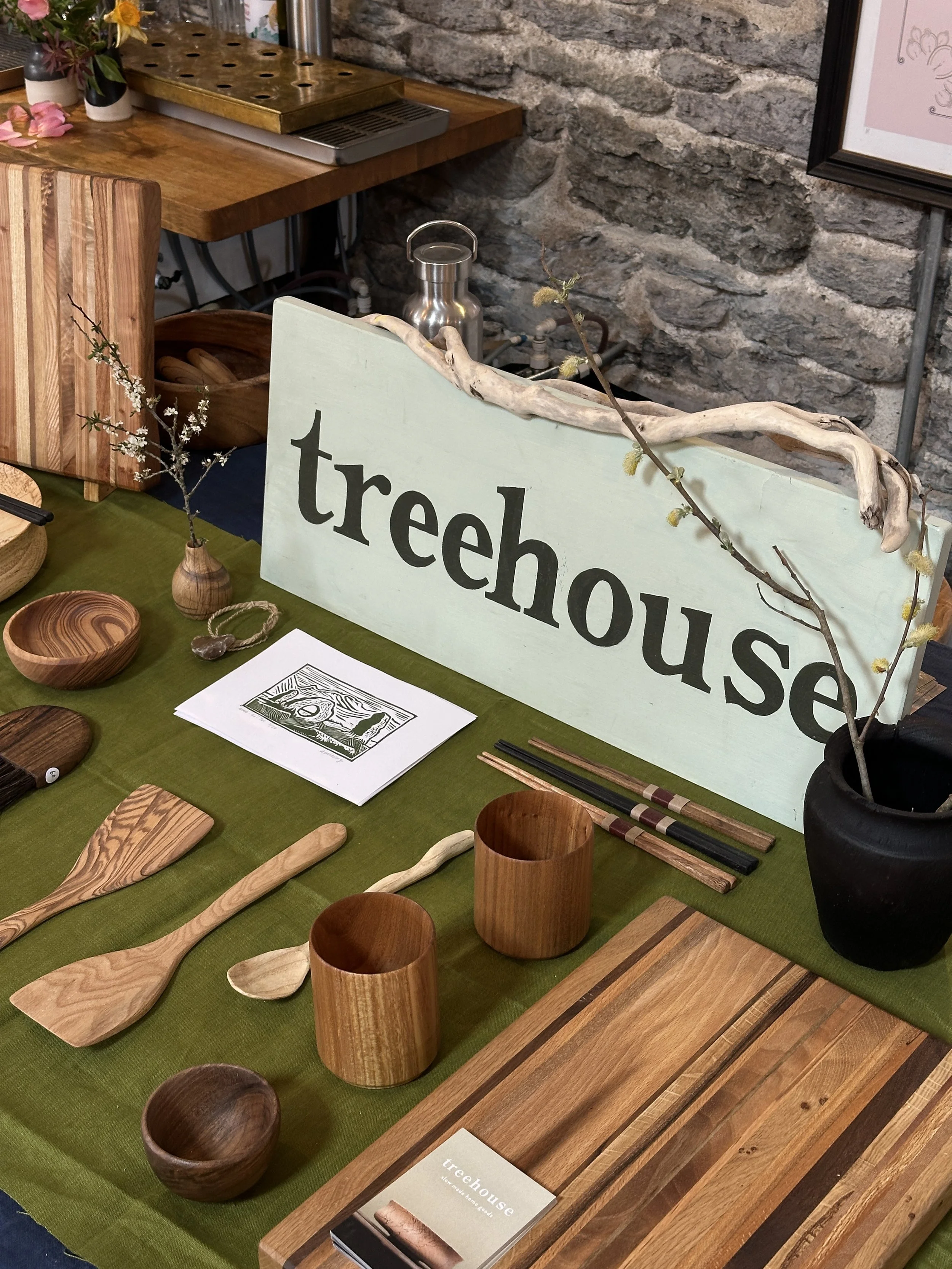
3. You and your partner Jimmy run Treehouse Goods, which feels so deeply rooted in craftsmanship and the outdoors. How did the idea come about, and what kind of things do you make and sell?
Jimmy initially started woodwork in lockdown in my parent’s garden, I would admire from afar and focused more on printmaking and painting. Eventually I started carving spoons and he set up a workshop in my Granny’s garage. We would often work nearby each other on different projects and eventually thought selling our pieces together could be a good idea. The name Treehouse came from a regular dog walk we did, a settlement of sticks and logs a few meters off the ground was a permanent fixture in a particular tree, one that myself and my cousins would alter growing up too. The name was fun, in the theme of wood and just stuck.
Now we make a variety of slow made home goods, from turned bowls, carved spoons, laminated boards to leather work and retired climbing rope dog leads and camera straps. Treehouse encompasses all of our creative practices really. I never liked being made to categorise my art in school and education so this felt like a form of reclaiming the fact you don’t have to have one niche or one exceptional skill.
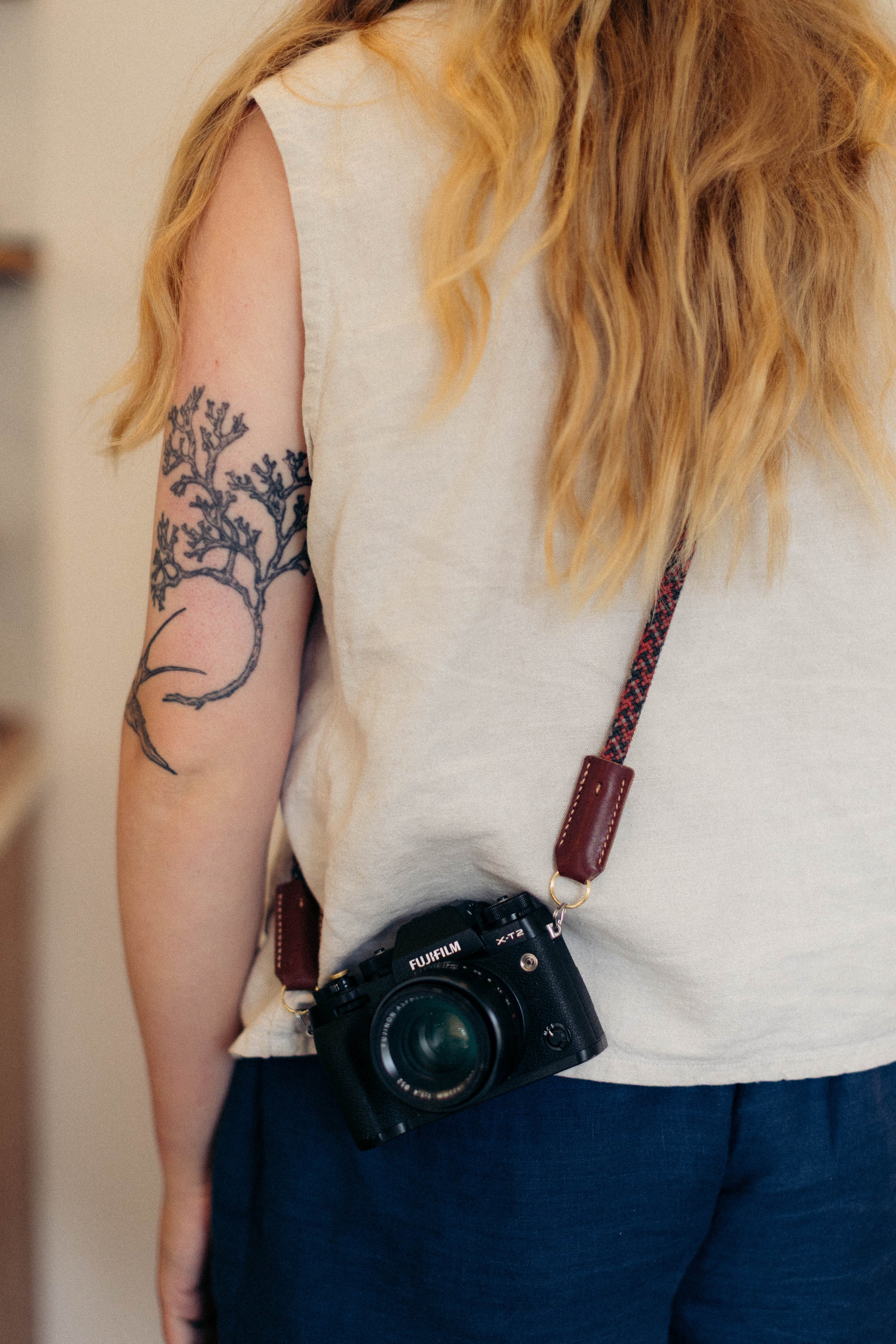
4. When you’re crafting for Treehouse Goods, how do you choose your materials or inspiration? Is there a story or place behind any of your favourite pieces?
All of our timber is locally sourced and naturally felled. Meaning they are trees that come down in storms or have been removed for safety reasons (rot, posed damage to property etc). Our leather is from an incredible tannery in Devon, the last oak bark tannery in the UK. They use naturally coppiced oak bark to tan their hides over 12+ months and river water. An age old practice that works in harmony with nature. Our climbing rope is all second hand and retired, these are often sent to landfill as they’re no longer safe to climb with despite being suited to reusing for other purposes.
There is a particular bowl we made from storm fallen spalted oak, given to us from a friend who worked in a temperate rainforest here in Cornwall. That is a very special piece with a wonderful origin.
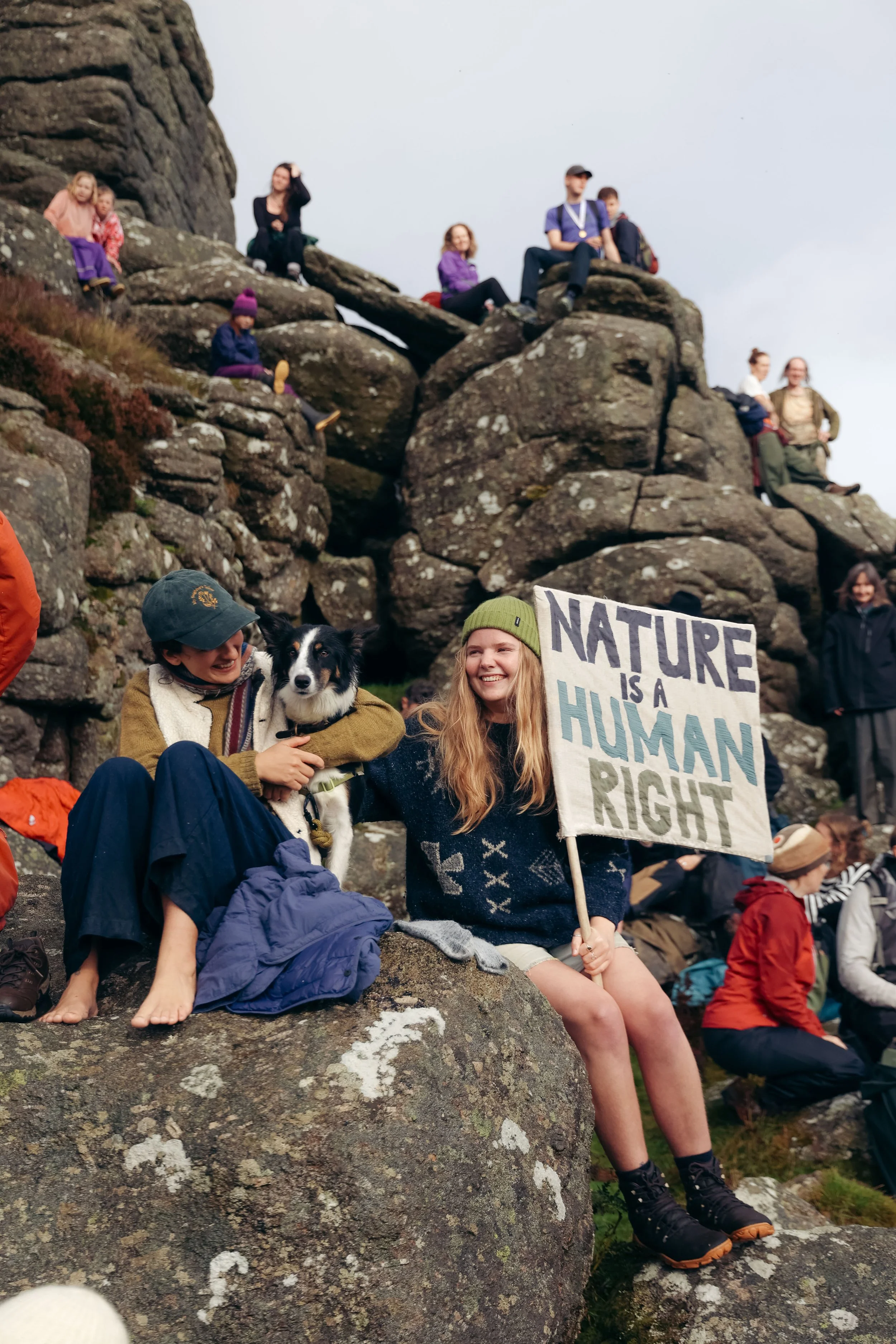
5. You’ve spoken passionately about access to land and our right to roam. What does that freedom mean to you personally, and how do you think we can encourage more people to connect with the wild places around them, responsibly and respectfully?
I think our general population is deeply disconnected from the natural world, we don’t know more than a handful of bird and plant species, we can’t distinguish what foragables are edible or have a basic knowledge of native wildlife and it’s a heartbreaking thing to witness. But it’s one that has been decided for us, our access to nature, wild lands and waterways is drastically controlled. Lack of access means we aren’t able to reforge what was once a birth right, sleeping under the stars, hunting our own food. Equally those things are critically done responsibly, which many of us are never offered the opportunity to learn. So it comes down to lack of knowledge and connection. Those two things are powerful.
Social media offers platforms for those who do care to educate and share knowledge. I don’t particularly label myself an influencer, but if I can influence people to spend more time outdoors, tuning into what’s above and below them and spark curiosity to learn more- then I’m content with that title.
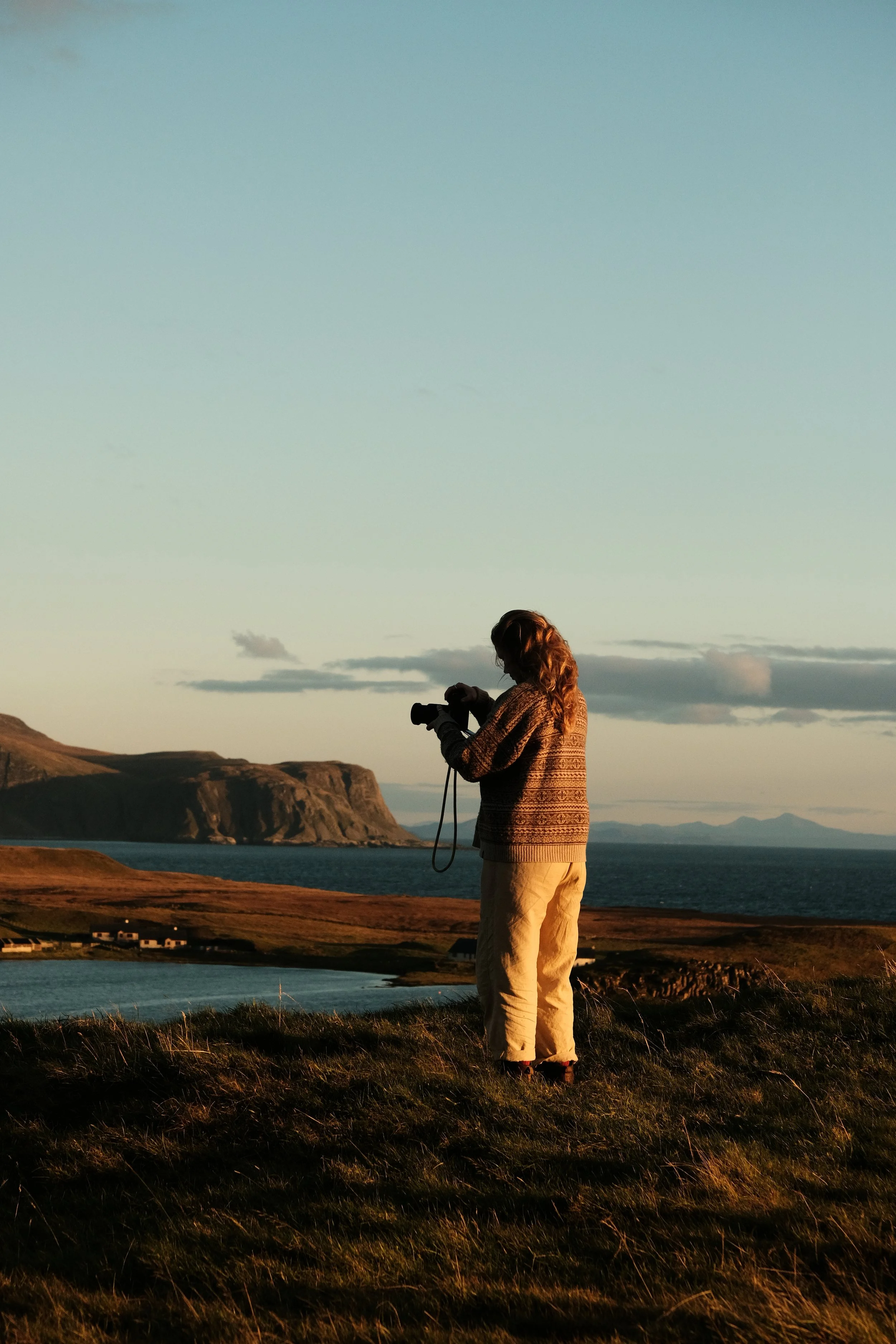
6. The image of “the outdoors” can sometimes lean towards extremes, big peaks, epic adventures, lots of gear. You often celebrate the slower, quieter side of being outside. Why do you think that gentler version of wildness matters?
I think this comes down to accessibility to the outdoors too. You don’t have to climb a mountain or drive for five hours to beautiful sweeping landscapes to enjoy nature. It can be sitting on a bench in your local green space and learning what birds are visiting at that time of year, or noticing what plants grow where and when.
7. It is very powerful seeing women such as yourself become powerful voices in the outdoor space. Were there any women who inspired you to explore, create, or live differently? And how do you hope your own journey might inspire others to do the same?
My Mum has always spent lots of time outdoors, I grew up watching her tend the allotment and bring back hoards of courgettes, beans, squashes and other produce throughout the seasons. The smell of sweet peas growing up the canes in the garden remain engrained as a childhood memory as well. My parents took their van travelling around Europe in their 20s and wild camped much like I do now. It's nice to follow in their footsteps in that sense. I owe a lot of my love of the outdoors to them and how they raised myself and my brother.
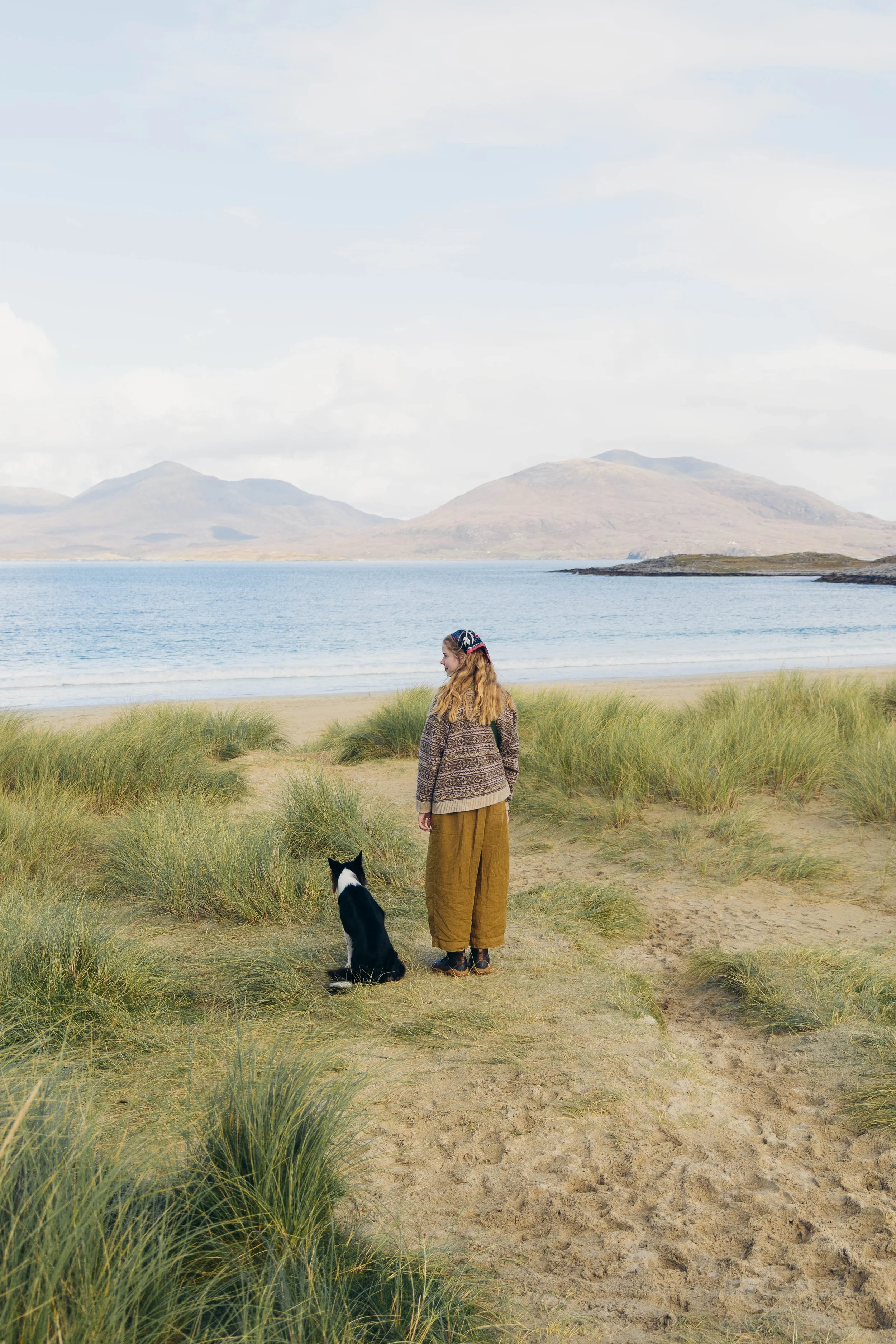
8. So much of your work and your words celebrate community, but also solitude. How do you balance those two things: sharing the outdoors with others, while also protecting that deeply personal connection to it?
Something I have always been an advocate for is not sharing specific locations on social media. I will always take close friends to beautiful places I’ve found, but sharing them with 40,000 people has never sat right with me. I am still frequently asked where locations are that I share, it’s just as much protecting the place as it is encouraging people to discover their own adventures. I spend hours researching hidden swim spots and exceptional walks before a trip and finally getting there makes it all the more wonderful.
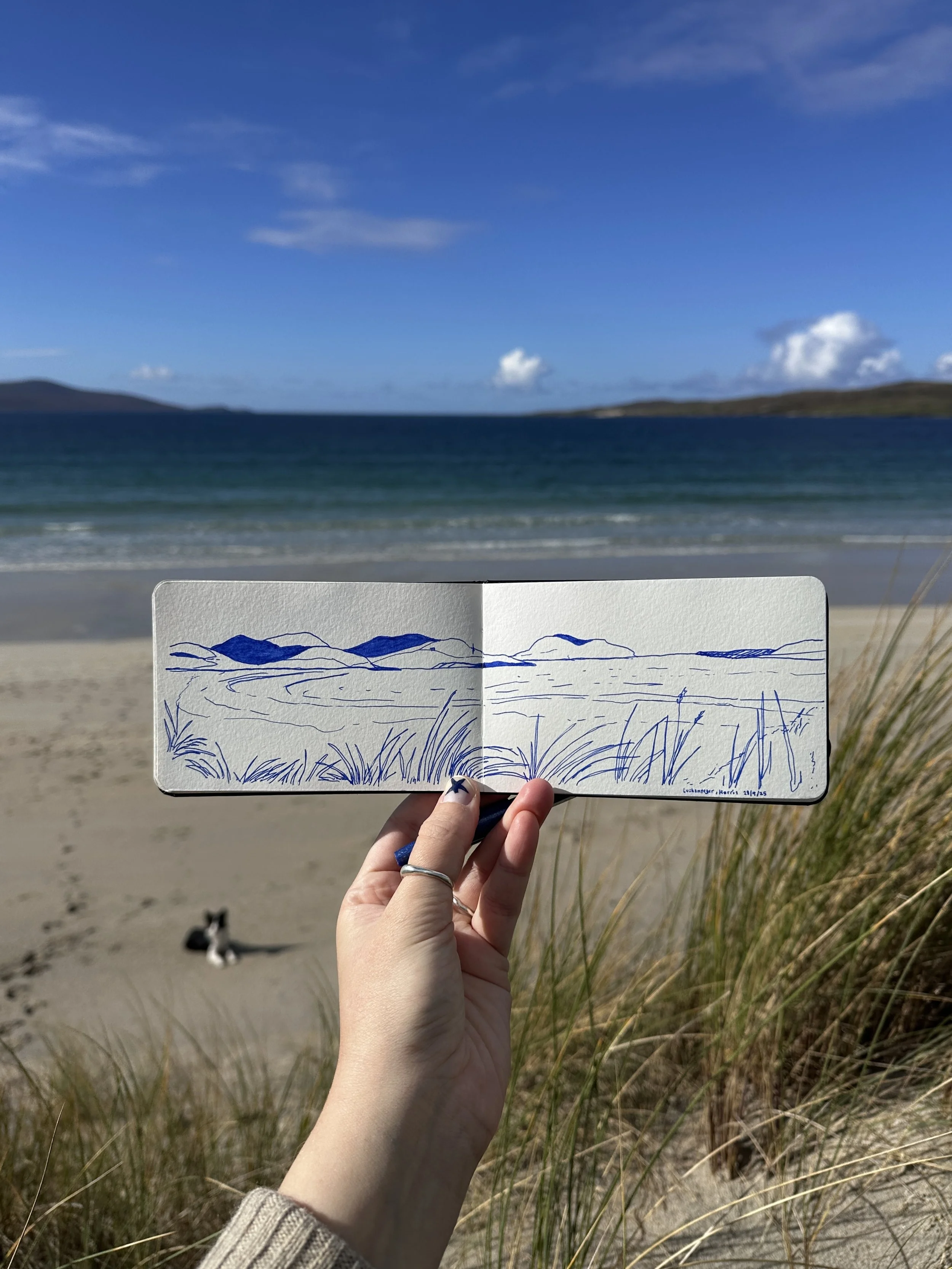
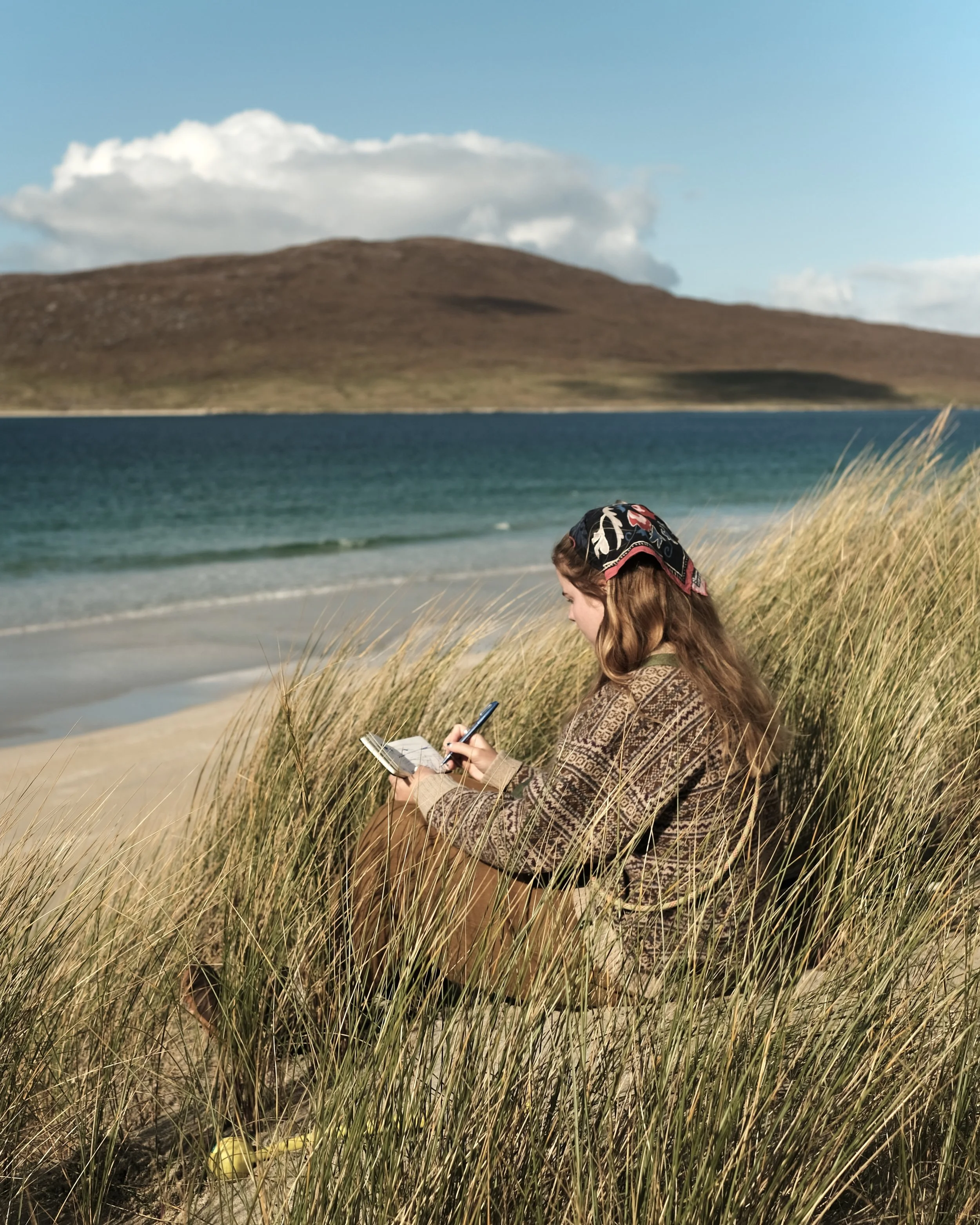
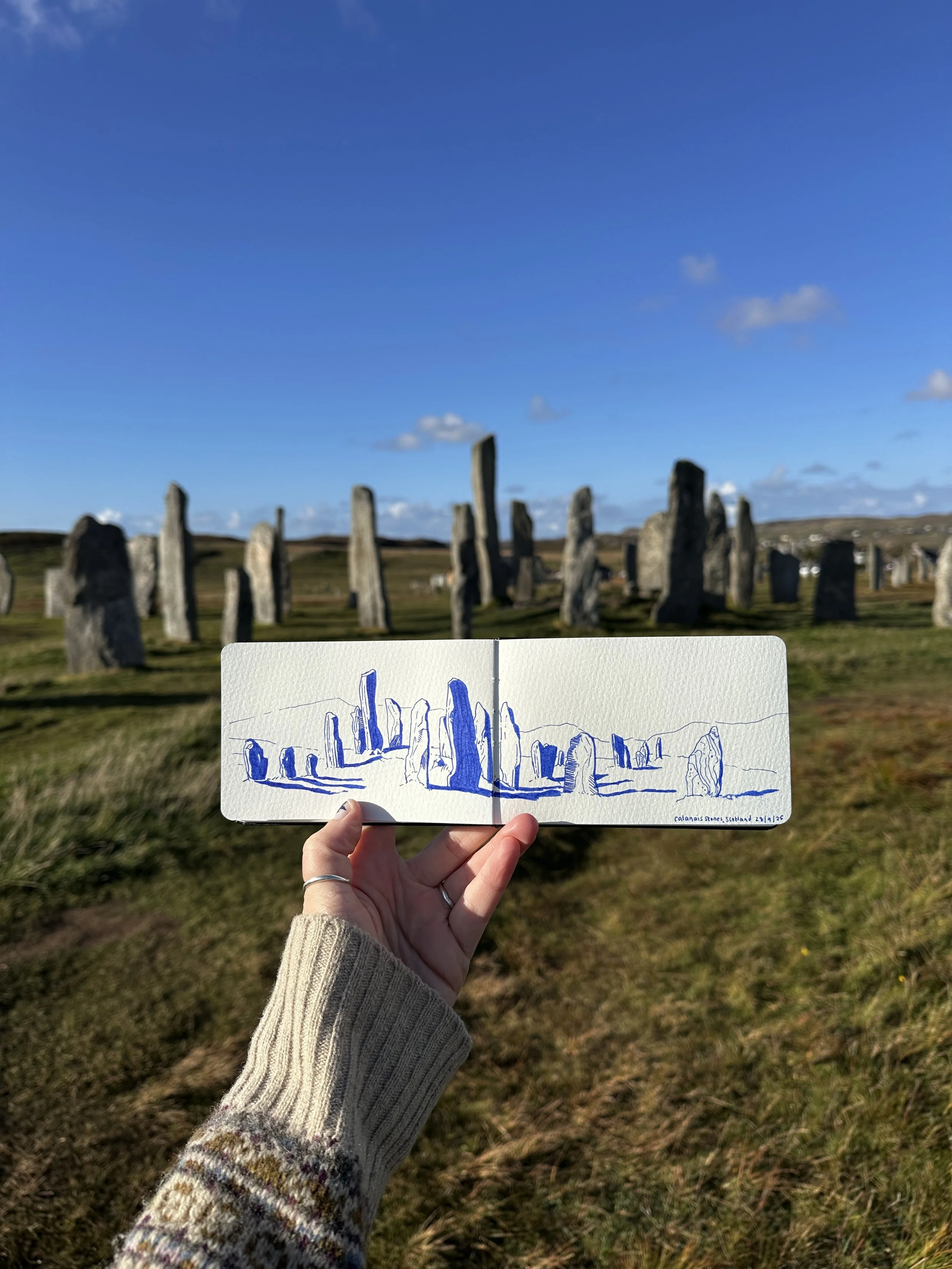
9. We often see this come up as a catchy social media trend. However, I know you love to sketch and take the time to really observe moments and things around you. Whether that be rock formations or mementos found on the sea shores. How does this way of observing the natural world help you creatively or is it more a way to switch off and relax?
I’ve always been an advocate for slow travel. A 35 year old van really lends itself to that lifestyle too… Visiting a spot just to take a photo and be on your way doesn’t encourage connection, even sitting for five minutes can offer so much. Listening for the birds return or the way different waves hit the bottom of the cliff. We miss so much when we move too quickly. I started sketching landscapes in person a couple of years ago, that process has developed as time has gone on. It keeps me rooted to a place, the way light falls behind rocks or through a canopy of trees suddenly remains more permanent in your mind. Sketching is one of the few ways I switch off, but also tune in to my natural surroundings.
10. A Field Blends Flash Round!
Campfire questions:
Sketchbook or Camera? Sketchbook!
One thing you always overpack? Books and hobbies- spoon carving equipment, art supplies, multiple cameras.
3 Dream guests around the campfire? Jane Goodall (Rest in Peace), Steve Backshall and David Attenborough would make for such interesting nature conversations.
Wool jumper or waterproof shell? Wool jumper always.
One word that sums up what “wild” means to you? Uncontrolled
Solo stroll or shared adventure? It truly depends on the day!
8. What’s Next for You Two? any new projects, travels, or ideas bubbling away for Tree House Goods or life on the road?
Honestly none hugely in mind! I’m keen to do some more solo trips next year, it’s something I’ve wanted to try for a while but anxiety has often held me back. But it feels like the right time now.
We’re hoping to do lots more wild camping once the weather warms up too.
